AI and LLM
Claude API, OpenAI, Perplexity. Agentic workflows, tool use and function calling, structured outputs, multi-model routing, multi-turn context management, prompt and context architecture, MCP, evaluation harnesses.
Thirty years of production software. Three years building agentic AI daily. I have shipped things a few years before the market had a name for them, more than once.
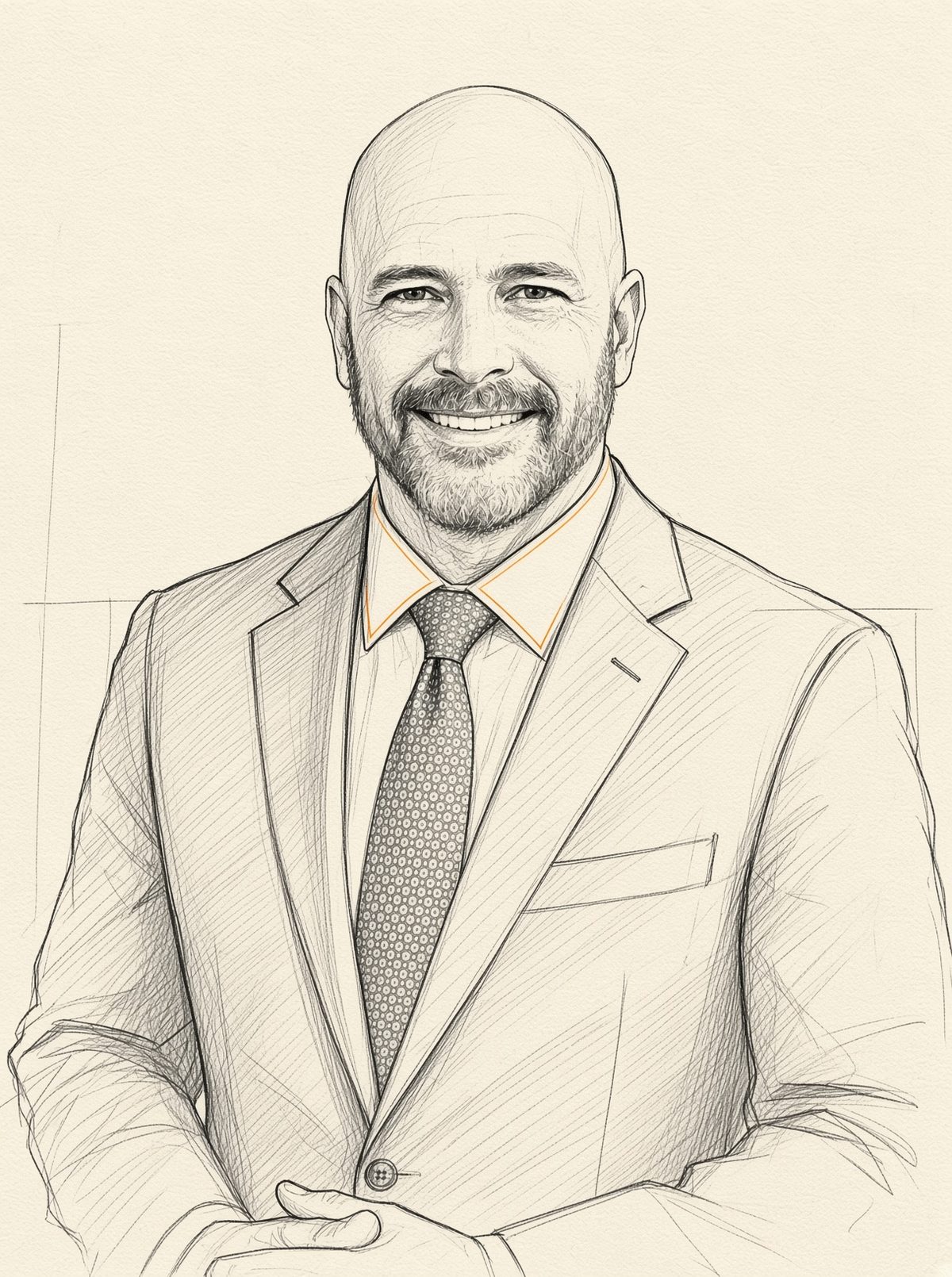
I taught myself to code on a 14.4 modem in Baton Rouge. Since then I have built enterprise systems for Wells Fargo, General Electric, and Blue Cross Blue Shield, architected an FDA-cleared telehealth platform, built a software department from zero for a Gulf South oilfield services company, and spent the last three years building agentic AI systems daily.
The throughline is not a technology. It is being early, being hands on, and shipping things that still run after I leave.
There is a longer list. These are the ones that say something a client can use.
Microsoft brought me to Redmond to help write the exams. The work defined the official standard against which .NET architects were measured worldwide. It is a peer-reviewed credential in the truest sense: other architects had to agree the standard was right.
Product owner and engineering lead on LILAH (Living Independent Life At Home), a remote patient monitoring platform cleared by the FDA under 510(k) K120941 and again under K130360. I named the platform and designed its threshold-based alerting model: caregiver-set limits on a patient's vitals that trigger alerts to family and care teams. That model is now the standard architecture of the remote patient monitoring industry. Named 2012 Louisiana Technology Product of the Year.
I run the city's grassroots AI adoption: bi-weekly AI meetups, hands-on coding workshops, and a standing room where founders, engineers, and operators work out what these tools actually do. I teach this material because teaching it is how you find out what you really know.
Microsoft Certified Database Administrator and Microsoft Certified Solution Developer. SQL Server administration, performance tuning, T-SQL, and migration, with twenty-plus years of production work behind the certifications.
Current, in production, hands on keys. Not a list of things I have read about.
Claude API, OpenAI, Perplexity. Agentic workflows, tool use and function calling, structured outputs, multi-model routing, multi-turn context management, prompt and context architecture, MCP, evaluation harnesses.
Cloudflare Workers, Pages, D1, KV, R2, Queues, Wrangler. Supabase PostgreSQL with row-level security. Serverless, multi-tenant architecture by default.
C# and .NET across ASP.NET Core, MVC, Razor Pages, Entity Framework. SQL Server, T-SQL, stored procedures, performance tuning, data warehousing with SSIS, SSRS, SSAS. PostgreSQL schema design.
TypeScript, Node.js, Astro, React. Stripe billing with idempotent webhooks, SendGrid, OAuth, third-party API integration with graceful degradation.
Azure DevOps, Git, CI/CD pipelines, Agile and Scrum. Code review discipline, root-cause debugging in distributed environments, async-first written documentation.
Built a software department from zero: hired and mentored eight-plus engineers, lifted on-time delivery from 45% to 85%, and cut production defects 60% through engineering governance.
The pattern is consistent. Telehealth architecture in 2012, before telehealth was an industry. Digital grassroots organizing in 2009. Agentic AI now, from New Orleans. I build early, and the world catches up.
Rob Gaudet
Software is one half of the background. The other half happened in disaster zones and on camera, and it is the half that tends to be useful when a project is really about getting people to move.
I founded the disaster relief nonprofit formerly known as Cajun Navy Ground Force after the historic 2016 Louisiana floods, coordinating tens of thousands of citizen rescues through social media in ten days. Twenty-plus deployments since, across Harvey, Irma, Michael, Laura, Ian, and Helene. I created SAFE Camp, the forward operating base model, funded by the Walmart Foundation, and directed a twelve-week Hurricane Ian response that moved more than $10M in aid. A 501(c)(3) with Candid Gold transparency, focused on the elderly and disabled survivors most often left behind.
Running field logistics under real pressure is where I learned that data, operations, and communication are one discipline, not three.
A published author with Pelican Publishing on citizen-led disaster response. Television host of Mutant Weather, a ten-part series on climate change and coastal flooding. Dozens of live national television appearances across Fox Business, CNN, and national news, plus features in USA Today, Reuters, the Washington Post, and the BBC.
I built audiences from nothing, including one over 200,000 that reached tens of millions of people a year and funded roughly a million dollars of annual relief. Keynote at the 2019 National Association of Attorneys General Capitol Forum in Washington, on the invitation of then-Attorney General Jeff Landry. Speaker at The Wharton School.
Built a software department from zero for a Gulf South oilfield services company: hired and mentored eight-plus engineers, lifted on-time delivery from 45% to 85%, and cut production defects 60%. Directed hundreds of volunteers across multi-week deployments in conditions where the plan changes hourly.
Most technical problems in a company are not technical. Knowing the difference is most of the job.
Most AI projects do not fail on the model. They fail on adoption: nobody explains the thing well enough, nobody drives it into daily use, nobody tells the story that makes people want it.
I have spent thirty years on the engineering side and a decade on the communication side, at national scale. When your system needs to actually land inside an organization or in front of a market, that is not a separate hire.